

Top Teacher Theory 1: How people learn
-
Welcome to Top Teacher Theory6 Topics
-
How People Learn24 Topics
-
Behaviorism in practice
-
A simple lesson flow using behaviorist steps (example: multiplication fluency)
-
Cognitive approaches
-
1) Memory — the constraints and opportunities
-
2) Attention — the gatekeeper of learning
-
3) Processing — surface vs deep; serialistic vs holistic; Kolb’s cycle
-
4) Developmental & content sensitivity (Piaget + brain findings)
-
5) Metacognition and targeted learning
-
6) Social constructivism: learning together is powerful
-
7) Assessment and feedback — formative as the engine
-
8) Practical design checklist for a cognitively-smart lesson
-
9) Adapting for different learner strategies and styles
-
10) Short sample micro-lesson (45 minutes) — topic: density (ages 11–12, concrete-operational)
-
11) Five small changes you can make next lesson
-
Constructivism and active learning
-
Practical teacher moves: how to support learning-by-doing
-
Short example lesson — “Three-legged stool” (transfer-focused)
-
Sample teacher checklist for active, constructivist lessons
-
Social and motivational factors
-
Peers and group dynamics — social constructivism in practice
-
Identity, self‑concept and subject‑specific esteem
-
Motivation: intrinsic vs extrinsic (and why rewards can backfire)
-
Classroom practices — before, during and after teaching
-
Responding to the “unstable” or “rejected” student
-
Behaviorism in practice
-
Differentiation and Personalization35 Topics
-
Tiered activities and choice
-
Models of tiered activities
-
Practical, ready-to-use examples
-
Simple choice tools you can implement today
-
A simple Tiered Activity Planner (use for any lesson)
-
Assessment, feedback & grading (don’t hurt self‑esteem)
-
Troubleshooting common issues
-
Mini 45‑minute lesson plan you can try tomorrow
-
Flexible grouping
-
Data-driven grouping: a simple three-step process
-
Types of groups — choose the right one for the learning goal
-
Designing group tasks for targeted growth
-
Practical classroom routines & logistics
-
Avoiding stigma and supporting self-esteem
-
Example: a simple lesson cycle using flexible grouping
-
Dos and don’ts — at a glance
-
Universal Design for Learning (UDL)
-
Practical UDL strategies — structure by the three UDL principles
-
UDL in the lesson cycle: Before → During → After (practical checklist)
-
Mini UDL lesson template (practical, ready to copy/paste)
-
Quick adaptations for common classroom situations
-
Formative assessment & UDL — short how-to
-
EdTech for personalization
-
Practical toolbox (what to use and why)
-
Step-by-step workflow: how to design a personalized lesson with EdTech
-
Sample mini lesson flows (practical examples)
-
Metacognition and self-paced practice (student agency)
-
A short teacher checklist before you launch a personalized EdTech lesson
-
Teacher professional development & finding research / OER
-
Student agency and voice
-
Quick classroom strategies (practical, low‑prep)
-
Scaffolding agency for different students
-
Sample choice menu (middle school science)
-
Feedback language you can use (fast scripts)
-
Quick lesson‑planning checklist for agency
-
Tiered activities and choice
-
Understanding Learner Development17 Topics
-
Developmental trajectories
-
From “pre-structural” to “abstract” — levels of information processing you’ll see
-
Vygotsky and social constructivism — learning is social
-
Practical classroom strategies by age band (concise)
-
Individual differences
-
Special educational needs
-
Before teaching: gather info & plan inclusively
-
During teaching: practical classroom strategies
-
Quick classroom tools (printable in your lesson kit)
-
Sample lesson modification — short example (Math: area of rectangles)
-
Teacher development: keep learning
-
Cultural and language diversity
-
Practical classroom strategies
-
Assessment: fair, supportive, and learning-focused
-
Classroom routines and small activities
-
Dealing with cultural misunderstandings and behavior differences
-
Sample mini-lesson flow (Before / During / After) — practical and brief
-
Developmental trajectories
-
Your Feedback Matters 🙏
Participants 3

Short version first: a skill is a discrete, teachable ability (e.g., calculate a percentage, conjugate a verb, use a pipette). A competence is a broader, integrated capability that combines knowledge, skills, attitudes and the ability to apply them appropriately in new situations (e.g., solve financial problems, communicate persuasively in a foreign language, carry out a safe lab investigation and interpret results). Both matter — but they need different teaching, practice and assessment.
Below I explain the difference, connect it to Piaget, Kolb and constructivist ideas in the Top Teacher Theory context, and give practical, ready-to-use guidance for lesson planning, classroom activities and assessment.
Why the distinction matters
- Teaching only skills often produces atomistic learning: students can repeat steps but can’t apply ideas in context. That’s rote or surface processing.
- Teaching only broad competences without building the underlying skills leaves students unprepared to perform reliably.
- A strong teacher intentionally teaches discrete skills and supports students as they combine those skills into competences through experience, reflection and social interaction.
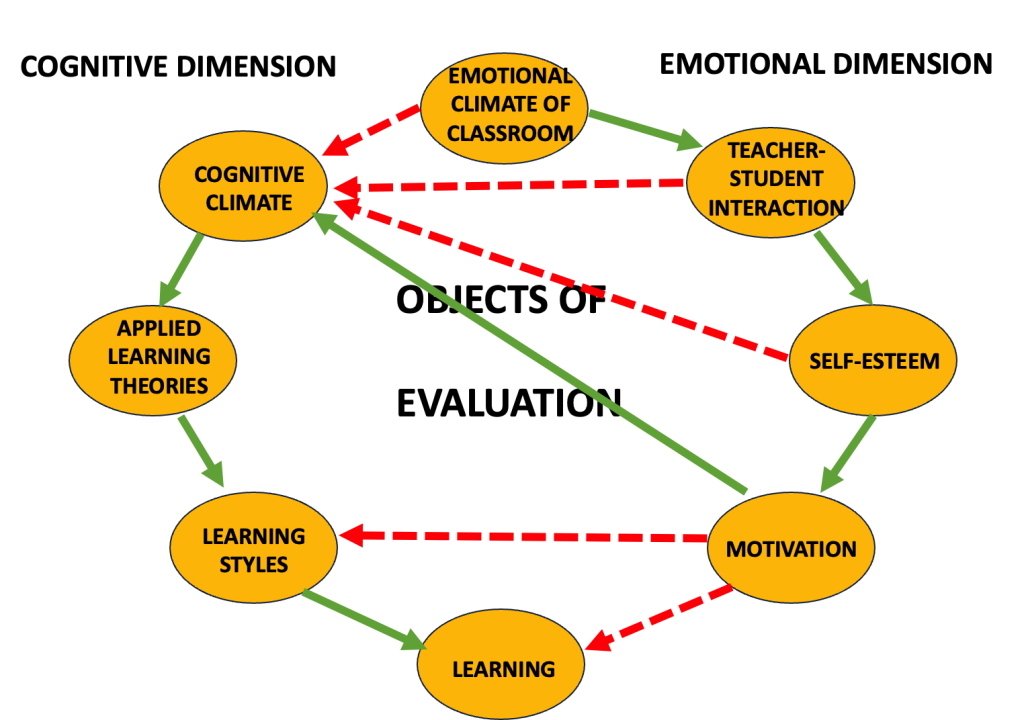
This ties directly to the book’s themes:
- Piaget: many students operate in the level of concrete operations — they need experiential, concrete learning to build higher-level, abstract competences.
- Kolb: the experiential learning cycle (experience → reflect → conceptualize → test) is the process through which skills become part of a wider competence.
- Ausubel / constructivism: new learning must be anchored to prior knowledge; competences are built by connecting and restructuring prior schemata.
Skill vs competence — concrete differences
- Focus
- Skill: a single, observable action or technique.
- Competence: integrated performance combining multiple skills, knowledge and attitudes.
- Example outcomes
- Skill: “I can solve a quadratic equation.”
- Competence: “I can model a real-world problem, choose an appropriate mathematical method, interpret the solution and communicate its meaning.”
- Typical assessment
- Skill: checklist, short quiz, one-step performance test.
- Competence: rubric-based performance task, project, portfolio, observation of transfer to new contexts.
- Learning route
- Skill: repetition and deliberate practice, guided feedback.
- Competence: situated practice, problem/project work, reflection, social negotiation and transfer tasks.
Examples (so it’s concrete)
- Reading
- Skill: decoding words; identifying main idea in a paragraph.
- Competence: reading to learn — synthesising information from multiple texts, evaluating sources, using reading to solve a problem.
- Science
- Skill: accurately measuring volume with a pipette; making a graph.
- Competence: designing and carrying out an investigation, evaluating evidence, explaining results and drawing conclusions.
- Languages
- Skill: conjugating verbs; pronouncing sounds correctly.
- Competence: holding a persuasive conversation in context, adapting language to audience, understanding cultural cues.
- Maths
- Skill: calculating percentages or solving an equation.
- Competence: using mathematics to model a budgeting problem, explaining assumptions and consequences.