Back to Course

Top Teacher Theory 1: How people learn

0% Complete
0/0 Steps
  1. Welcome to Top Teacher Theory
    6 Topics
  2. How People Learn
    24 Topics
  3. Differentiation and Personalization
    35 Topics
  4. Understanding Learner Development
    17 Topics
  5. Your Feedback Matters 🙏
Lesson Progress
0% Complete

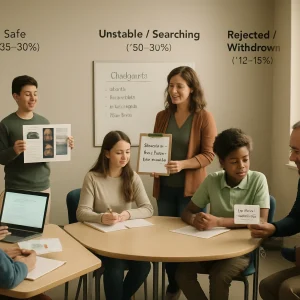
Photorealistic editorial photo of a modern classroom arranged into three connected zones that visualize differentiated student agency. Left (Safe ~25–30%): a confident student presents an independent project to peers—open materials, a student leader with a laptop and poster, classmates watching and taking notes. Center (Unstable / Searching ~50–56%): a small group around a table as a teacher offers a clipboard with a simple choice menu (choose one of three topics, one of two formats), checkpoints on the whiteboard and focused positive feedback as students collaborate. Right (Rejected / Withdrawn ~12–18%): a teacher kneels beside a withdrawn student offering a micro-choice card and a gentle invitation for a five-minute scaffolded task, private conference setup and achievable mini-task materials visible. Warm natural window light, shallow depth of field with crisp facial detail, diverse ages, races, and abilities; balanced composition with negative space for a headline.

Remember the three interaction profiles from the research: Safe (~25–30%), Unstable/Searching (~50–56%), Rejected (~12–18%). Tailor agency efforts accordingly.

  • Safe students
    • Give broad, open choices and independent projects.
    • Expect internal motivation; push for transfer tasks and leadership roles (peer mentors, presenters).
  • Unstable / Searching students
    • Offer limited, structured choices. Example: “Choose 1 of these 3 topics AND choose 1 of these 2 formats.”
    • Use regular, predictable checkpoints and positive, specific feedback to build trust.
    • Allow low‑risk ways to show voice (small group decision making before whole class).
  • Rejected / withdrawn students
    • Start with relationship building and micro‑choices (seat, group, partner, topic interest).
    • Use scripted, gentle invitations: “Would you like to try this together for five minutes?” rather than full autonomy.
    • Private, scaffolded conferences and achievable mini‑tasks increase self‑esteem before larger choices.

Please take the quiz to proceed: