
Classroom routines and small activities

didactec 17.09.2025
Lesson Progress
0% Complete
Quick starters
- Home-language warm-up: 2 minutes — students write one word in their home language connected to the lesson topic and share its meaning.
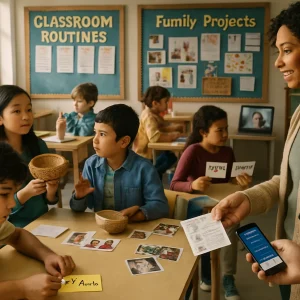
- Cultural artifact show-and-tell: once a week, a student brings an object, explains (in L1 or L2), and the class asks questions.
Pair and group activities
- Think–pair–share with sentence frames.
- Jigsaw reading: each group reads a short text in mixed languages; groups teach each other.
Longer projects
- Community interview + multimodal presentation: students interview a family member about a topic, collect photos, write a short bilingual report, and present.
- Culture-as-source project: students research a cultural practice (math, science, art) and design a lesson or model showing how it connects to curriculum concepts.
Working with families and communities
- Build trust: invite families to share stories, recipes, or skills in class. Host multilingual family nights or digital story collections.
- Communicate respectfully: send notes home in families’ languages when possible; use simple visuals; use community liaisons or translation apps where needed.
- Use funds-of-knowledge approach: ask families about hobbies, jobs, crafts — these are resources for learning.
Please take the quizs to proceed: