
Teacher language / prompts that work

didactec 22.09.2025
Lesson Progress
0% Complete
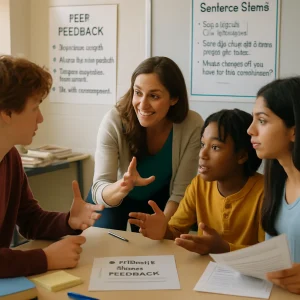
- “Explain this to your partner as if they had never heard the idea before.”
- “Show the step where you think most people get stuck.”
- “What is one alternative solution you considered and why did you reject it?”
- “When you listen, ask: ‘What evidence do you have for that conclusion?’”
Final notes — connecting to the Top Teacher context
- Collaborative learning is a practical embodiment of student-centered, knowledge-centered and assessment-oriented teaching: it builds from prior knowledge (Ausubel, Piaget), uses social scaffolding (Vygotsky), cycles experience/reflection (Kolb), and offers rich opportunities for formative assessment and metacognition.
- It can strengthen self-esteem and motivation when implemented with clear norms and positive feedback habits — crucial because the research shows motivation and teacher‑student interaction drive learning more than raw ability alone.
- Start small, model often, and use peers as a force multiplier: they help explain, practice and assess — and in doing so they learn more deeply than from teacher-only explanations.
Handout for students (copy into lesson)
- 3-minute rules for peer feedback: 1) Start with a strength. 2) Ask one clarifying question. 3) Suggest one specific improvement. 4) End with encouragement.
- Sentence stems sheet (as above).
- Quick reflection prompts: What did I learn? What surprised me? What will I try next?
If you want, you can ask AI to:
- Create a printable rubric and exemplars for a chosen subject.
- Draft a 45‑minute lesson plan using one of the activities tailored to your grade/subject.