

Lesson Progress
0% Complete
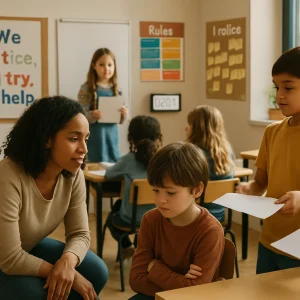
Responsive strategies that promote responsibility and engagement
Overview
A lot of the learning puzzle comes down to how students feel in class. When students feel safe, noticed and competent, motivation and engagement follow. This topic gives you practical, research‑informed strategies to shape classroom behavior in ways that build self‑esteem, encourage responsibility, and activate real learning — not just compliance.
Why this matters (the quick theory bit)
- Teacher–student interaction is a major predictor of motivation and school success. Secure, warm interactions raise self‑esteem → self‑esteem boosts intrinsic motivation → motivation fuels learning.
- Students typically fall into three interaction profiles: safe (confident, curious), unstable/seeking (attention‑seeking, testing whether they’re valued), and rejected (withdrawn, passive or protest behavior). Your responses will look different with each group.
- External rewards often drive short‑term compliance but can undermine intrinsic exploration. Unexpected, non‑contingent kindness or recognition is less damaging and can be effective.
- Maslow/Vygotsky/Piaget remind us: physiological and emotional safety must come first; social interaction enables higher learning; and new learning must connect to prior knowledge.
Principles to guide everything you do
- Prioritize relationships first: strengthen self‑esteem through noticing, help, and consistent support.
- Be warm AND firm: “gentle, consistent firmness” helps especially for passive/rejected students.
- Teach social and interaction skills explicitly — they’re prerequisites for learning for many students.
- Design learning that is cognitively appealing: novelty + challenge sustains intrinsic motivation.
- Use formative feedback and metacognitive prompts instead of relying on rewards/punishments.
Please take the quiz to proceed: