
A short lesson plan snippet: teaching an expectation

didactec 22.09.2025
Lesson Progress
0% Complete
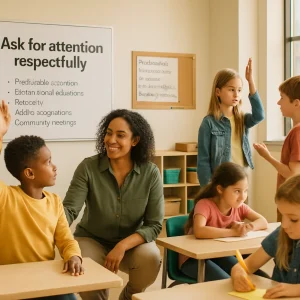
Objective: Students will learn and practice the class norm “Ask for attention respectfully.”
- Hook (2 mins): Share a short story of a student who got attention in a positive way and how it helped them learn.
- Teach (5 mins): Explain the norm and model appropriate vs. inappropriate ways (role play).
- Practice (8 mins): In triads, students practice asking for help and responding.
- Apply (5 mins): Real tasks while enforcing the new routine; teacher uses planned attention on a pre‑selected student to demonstrate reliability.
- Reflect (3 mins): Quick exit ticket — one thing they’ll try next time they need help.
Troubleshooting — common scenarios and fixes
- “Too many disruptions from seeking students”: schedule predictable attention, teach replacement behaviors, and use proximity during class activities.
- “Rewards cause competition and anxiety”: switch to public recognition of effort (non‑material), emphasize mastery and improvement over ranking.
- “Quiet students don’t participate”: give private invitations, small written responses, and pair them with supportive peers.
- “Class doesn’t feel cohesive”: implement weekly community meetings and group tasks that require interdependence.