
Practical classroom systems and routines

didactec 22.09.2025
Lesson Progress
0% Complete
Make these part of your class DNA so behavior becomes predictable and students feel safe.
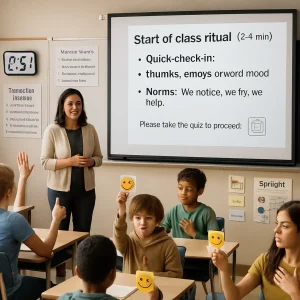
- Start‑of‑class ritual (2–4 minutes)
- Quick check‑in: thumbs, emojis, or a one‑word mood.
- Two brief norms reminder: “We notice, we try, we help.”
Why: Meets emotional needs early, lets you spot who’s unstable/seeking.
- “Spotlight” attention system
- Give equitable, planned attention: schedule 1–2 short check‑ins with students who seek attention, so they don’t constantly test the teacher.
Why: Reduces disruptive testing while affirming the student.
- Roles & rotating responsibilities
- Jobs like Tech Captain, Materials Lead, Peer Mentor — rotate weekly.
Why: Builds competence, gives purpose, and raises self‑esteem through contribution.
- Predictable transitions & visual routines
- Timers, slide with steps, and a short verbal script for transitions.
Why: Reduces anxiety (especially for unstable/rejected students) and prevents behavior that comes from uncertainty.
- Low‑intensity signals for class attention
- Example: raise a palm = 3 secs to quiet; chime = volume down; hand on heart sign = reflective pause.
Why: Keeps routines calm and reduces power struggles.
Please take the quiz to proceed: