
Feedback and praise that builds self‑esteem

didactec 22.09.2025
Lesson Progress
0% Complete
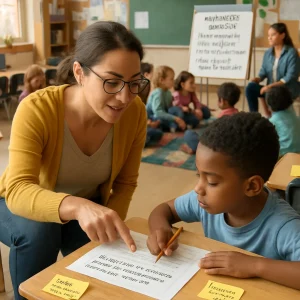
Be specific, genuine, and process‑focused.
- Instead of “Good job!” try: “You organized your ideas and used two pieces of evidence — that made your point clear.”
- Praise effort and strategies: “You tried three ways before asking for help — smart problem‑solving.”
- Link behavior to values: “You helped Sara clean up without being asked — that shows you care for our class.”
- Use formative feedback often: quick verbal notes, margin comments, and one‑minute written notes telling what improved and next step.
Rewards: use sparingly and smartly
- Avoid promised/tied rewards (carrots on a stick) for learning tasks — these reduce exploration.
- Prefer intrinsic motivators: challenging problems, meaningful tasks, autonomy, competence, relatedness.
- If you use rewards, make them unexpected and small (an impromptu note of thanks, spot recognition) rather than a scheduled payoff.
Teach social skills explicitly
Some students need direct instruction in how to interact.
- Mini‑lessons (10–15 mins) on: asking for help, giving compliments, calming strategies, conflict resolution, how to join a group.
- Use role play, modeling, and peer practice.
- Circle time or community meetings weekly: build shared norms, let students voice concerns, practice restorative questions.
Restorative language and repair
When harm happens, focus on repairing rather than punishing.
Restorative questions:
- What happened?
- Who was affected and how?
- What needs to be done to make this right?
- What will you do differently next time?
This helps rejected/unstable students see consequences as relationship work, not rejection.
Please take the quiz to proceed: