
Assessment: using peers without damaging reliability

didactec 22.09.2025
Lesson Progress
0% Complete
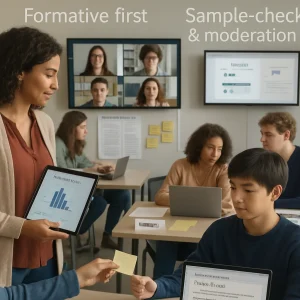
- Use peer assessment mainly as formative. For summative use:
- Combine peer scores with teacher moderation and self-evaluation.
- Sample-check peer marks and give feedback about feedback quality.
- Train students with anchored exemplars before they judge.
- Monitor standard deviation: large spread in peer scores signals need for more calibration.
Digital & remote-friendly options
- Think–Pair–Share via breakout rooms (2–3 mins). Give a clear prompt and a reporting task.
- Jigsaw using shared docs: each expert group edits a shared page; home groups synthesize.
- Peer Instruction with polling tools (Poll Everywhere, Kahoot, LMS quizzes); follow same discussion/reauthoring cycle.
- Peer review in LMS: enable rubrics and double-blind submission where possible.
Dealing with common problems
- Social loafing: set individual accountability (individual quiz, role logs, or short reflection).
- Dominant students: rotate roles; assign the dominant student a “devil’s advocate” role or coach role.
- Quiet/withdrawn students (rejected/unstable): begin with paired tasks, private praise, and scaffolded roles that let them contribute in small ways; build their confidence before public reports.
- Misconceptions reinforced: circulate and listen to group talk, use whole-class debrief to correct misconceptions revealed by peer discussion.
- Low-quality feedback: model, scaffold, and give meta-feedback on feedback (show examples of good feedback).
Please take the quiz to proceed: