

Lesson Progress
0% Complete
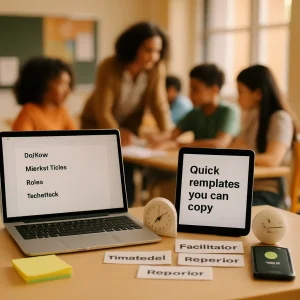
Do Now (3–5 min)
- Prompt: “Write one sentence: What concept from last lesson helps with today’s topic? Add one question.”
- Purpose: diagnostic + warm-up
Mini Exit Ticket (2 min)
- Prompt: “Rate your confidence 1–5. One sentence: what helped most? One question left?”
Group role card (rotate weekly)
- Facilitator: keeps the group on task.
- Recorder: types the answer in the shared doc.
- Timekeeper: gives the team 2-minute warnings.
- Reporter: shares the final answer with the class.
Online tech-check (Start)
- Post agenda slide + “Mic test: green emoji; Camera ok: 👍; I can see you: type ‘ready’”.
Final note — routines as an investment
Teach the routine once, rehearse it a bit, and the time you invest will pay back in less off-task behaviour, fewer interruptions, stronger social bonds and more cognitive space for thought. Routines are not about rigidity — they’re about freeing your students’ brains to do the hard, joyful work of learning. Try one new routine next week, keep it visible and practiced, and see how the learning climate shifts.
If you want, you can ask AI to:
- Draft a 1-week routine plan tailored to your age group (early years / primary / secondary / adult learners).