

Learning objectives
After completing this topic, the learner will be able to:
- Explain the basic operation and key components of a GDI system.
- Recognise common failure modes and symptoms related to high-pressure injectors and carbon build-up on intake valves.
- Perform safe, low-cost inspection and basic servicing tasks for GDI injectors and related systems using locally available tools and materials.
- Select and apply cost‑effective preventive maintenance methods suitable for resource‑constrained African contexts.
- Know when to refer to a workshop with specialist equipment or an OEM manual.
Overview: What is GDI and how it differs from port injection
Gasoline Direct Injection (GDI) delivers fuel directly into the engine combustion chamber, unlike port injection where fuel is injected into the intake ports. GDI systems provide improved fuel economy, power and emissions control, especially under certain operating conditions. However, because fuel does not regularly wash the intake ports and valves, carbon and oil vapour can accumulate on intake valves and port surfaces. GDI systems also operate at much higher fuel pressures (consult the vehicle-specific service manual; modern systems commonly operate in the order of tens to a few hundred bar), requiring specific safety and service procedures.
Key components (high level)
- High‑pressure fuel pump (HPFP)
- Fuel rail and pressure sensor
- High‑pressure injectors (direct injectors)
- Engine Control Unit (ECU) and sensors (MAP/MAP, crank/cam, O2)
- Low‑pressure fuel system components (tank, filter, lift pump)
Common problems and symptoms
- Misfire or rough idle (especially at low speed)
- Reduced power and increased fuel consumption
- Hard starting or longer cranking
- Excessive smoke or poor emissions test results
- Check Engine Light with codes relating to fuel trim, injector circuit, or misfires
Many of these symptoms are caused or aggravated by:
- Injector wear or leakage
- Clogged or partially clogged injectors
- Carbon deposits on intake valves causing air-flow restriction and poor sealing
- Fuel system contamination (dirt, water, poor-quality fuel)
Safety first — essential cautions
- GDI systems are high pressure. Always relieve fuel system pressure before disconnecting fuel lines or removing injectors. Refer to the OEM procedure.
- Work in a well‑ventilated area, away from open flames, heat sources or sparks.
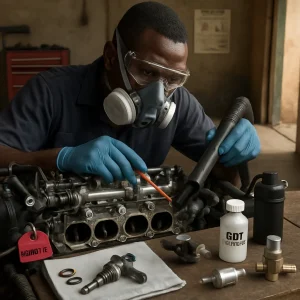
- Use eye protection, gloves and protective clothing; use respiratory protection when working with solvents, sprays or blasting media.
- Avoid improvised tools on pressurised fuel parts; use correct fittings or adaptors and hand tools.
- If you are unsure, stop and refer to an experienced technician or a workshop with appropriate equipment.
High‑pressure injector care — inspection and basic servicing
Purpose: maintain atomisation quality and sealing to preserve combustion and emissions performance.
Routine inspection checklist
- Visual check for fuel leaks around injector body, seals and rail.
- Inspect injector electrical connector for corrosion, secure fit and wiring damage.
- Check O‑rings and sealing surfaces for nicks or brittle rubber; replace if worn.
- Note injector spray pattern and flow performance (bench test — specialist). Where bench testing is not available, look for rough idle or misfire which can indicate injector problems.
Safe removal (summary for training — always consult vehicle manual)
- Relieve fuel pressure per manufacturer procedure.
- Disconnect battery negative terminal to avoid electrical hazards.
- Remove engine covers and any components obstructing access.
- Disconnect electrical connectors from injectors.
- Carefully remove retaining bolts/clips and lift injectors with manifold if required; keep them vertical and clean.
- Inspect and replace O‑rings/seals; lubricate new O‑rings with a little clean engine oil or manufacturer recommended grease on reinstallation.
Basic, low‑cost cleaning approaches for injectors
- External cleaning: wipe body and connector with a lint‑free cloth and suitable solvent (avoid harsh immersion of electrical parts).
- On‑vehicle fuel‑rail‑connected cleaning kits: commercially available “fuel rail cleaning” adapters allow introduction of a solvent cleaner into the fuel rail while the engine runs. These are economical when available locally and can remove some deposits. Follow kit and chemical manufacturer instructions; do not attempt with high‑pressure systems unless adapter and procedure match vehicle type.
- Off‑vehicle manual cleaning: where bench ultrasonic cleaning and flow testing are unavailable, a controlled soak in an appropriate injector solvent can help dislodge deposits. Remove injector pintles and expose spray tip only as recommended by the manufacturer. DO NOT dismantle modern injectors beyond recommended service items unless trained.
- Replace seals and re-install. Test for leaks before start‑up.
Limitations: Inexpensive cleaning may not restore severely fouled or mechanically degraded injectors. In those cases, recommend professional ultrasonic cleaning and flow testing or replacement.
Carbon buildup on intake valves — why it happens and why it matters
Cause:
- In port injection engines the intake valves are washed by fuel which reduces deposits. In GDI engines, fuel is injected directly into the combustion chamber so valves do not receive the cleaning effect of fuel.
- Positive Crankcase Ventilation (PCV) vapours carry oil into the intake tract and deposit on valve faces. Combustion by‑products and soot also accumulate.
- Low‑quality oil, extended oil change intervals and poor fuel quality accelerate the problem.
Effects:
- Restricted airflow and altered swirl, leading to rough idle and power loss.
- Valves do not seat perfectly, causing poor compression and misfires.
- Elevated hydrocarbon emissions.
Cost‑effective cleaning and maintenance approaches (suitable for resource‑constrained contexts)
Priority preventive measures (low cost, high impact)
- Fuel quality: source the best available fuel and avoid contaminated or water‑laden supplies. Use inline fuel filters and replace at recommended intervals or earlier if fuel quality is suspect.
- Oil and filter changes: maintain proper oil service intervals using the recommended grade. Cleaner oil reduces vapour and deposit formation.
- PCV system maintenance: regularly inspect and clean or replace PCV valves/hoses to reduce oil vapour entering the intake.
- Fit a catch can: a simple oil catch can between the crankcase ventilation and intake can substantially reduce oil vapour reaching the intake. Simple locally fabricated or low‑cost commercial units are effective if emptied frequently.
- Air filter maintenance: a clean air filter reduces ingestion of dust that can contribute to deposits.
Low‑cost cleaning options and how to apply them
-
Periodic fuel‑system additives
- Use proven fuel‑system detergents labelled for GDI applications. These are the lowest cost and easiest preventive option.
- Expect modest improvements; such additives help maintenance but are rarely sufficient for severe valve carbon.
-
On‑vehicle “chemical soak” intake cleaning (moderate cost, commonly used)
- Remove intake plenum or access ports to expose intake valves.
- Apply a manufacturer‑approved intake cleaner to valve area and allow dwell time to soften deposits.
- Carefully scrape lightly with a plastic pick or brush to avoid damaging valve seats. Rinse and vacuum debris.
- This reduces deposit accumulation; effectiveness depends on deposit hardness and available access.
-
Mechanical cleaning (walnut shell blasting) — preferred method where possible
- Walnut shell media directed at intake valve/backside of intake ports removes carbon effectively without damaging metal when done correctly.
- Requires compressor and suitable blasting gun; this is an investment but many regional workshops offer the service at reasonable cost.
- Walnut blasting is fast and highly effective and should be used when deposits are heavy.
-
Professional injector service (for persistent injector issues)
- Ultrasonic cleaning and bench flow testing restore injector spray patterns and confirm flow rates. Arrange this if available locally; compare cost vs replacement.
- When bench testing is not possible, replacing worn injectors may be more cost‑effective.
Step-by-step inexpensive valve cleaning (example procedure for training)
- Tools/materials: basic hand tools, torque wrench, screwdrivers, plastic scrapers, small brushes, hand vacuum, appropriate solvent (manufacturer approved intake cleaner), cloths, PPE.
- Procedure outline:
- Disconnect battery negative terminal.
- Remove intake plenum per vehicle manual to expose intake ports.
- Cover open intake runners to avoid debris entering cylinders (use clean rags or screw-in protectors).
- Apply cleaning solvent to valve and let soak per product instructions.
- Gently agitate deposits with a soft brush or plastic scraper; avoid metal scrapers on valve seats.
- Extract loosened debris with a hand vacuum and wipe surfaces.
- Reassemble using new gaskets as necessary and torque fasteners to spec.
- Start engine and monitor for leaks/symptoms.
Notes:
- This procedure is labour intensive but feasible in many local workshops.
- For heavy carbon, recommend walnut blasting or professional intervention.
Diagnostic tips and simple tests (for resource‑constrained settings)
- Visual inspection and listening: inspect intake and injectors, listen for uneven idle or misfire.
- Scan tool: read and clear codes, monitor fuel trims (long and short), and cylinder balance where available.
- Basic electrical check: with injector disconnected, measure coil resistance and compare to vehicle spec. (Many GDI injectors have different impedance characteristics; consult manual.)
- Cylinder contribution test: where scan tool lacks features, perform a controlled cylinder balance test by disconnecting injectors one at a time while the engine is running (only when safe and per training guidance).
- Compression/leak‑down test: to rule out mechanical issues contributing to poor combustion that might be mistaken for injector or carbon problems.
Tools and materials recommended (low to moderate cost)
- Basic hand tools and torque wrench
- Safety gear: eye protection, gloves, respirator
- Fuel line pressure relief tools or follow OEM relief procedure
- Simple fuel rail cleaning/adaptor kits (if available)
- Intake cleaning solvents (OEM approved)
- Plastic scrapers, small brushes, hand vacuum
- Injector seal/O‑ring kit (vehicle specific)
- Catch can (commercial or locally fabricated)
- Compressor and walnut blasting kit (for workshops)
When to refer or replace
- Replace injectors if bench flow cannot be restored or if mechanical damage is present.
- Refer to a workshop with ultrasonic cleaning and flow testing for injectors when possible.
- For heavy valve carbon where local manual cleaning is ineffective, seek walnut blasting service.
- Consult OEM service manual for torque values, pressures and specific procedures at all times.
Competency checklist (for assessment)
- Can describe GDI operation and reasons for carbon build-up.
- Demonstrates safe depressurisation of the fuel system (per vehicle manual).
- Performs visual inspection of injectors and replaces O‑rings correctly.
- Performs an intake valve cleaning procedure safely and removes visible deposits without damaging components.
- Recommends and installs a catch can and explains its maintenance.
- Knows limits of low-cost methods and appropriately refers complex jobs.
References and further reading
- Vehicle OEM workshop/service manual (vehicle-specific procedures and torque/pressure specifications).
- Manufacturer safety data sheets (MSDS) for any cleaning solvents used.
- Local vocational training centre guidelines for fuel system work and hazardous material handling.
Practical final note
GDI servicing in low-resource environments requires careful balancing of safety, cost and effectiveness. Preventive maintenance (good fuel, regular oil/filter changes, PCV care, catch can) yields large benefits for modest cost. For heavy carbon or injector failure, seek a workshop with the correct equipment (walnut blasting, ultrasonic cleaning and injector flow testing) rather than attempting risky or damaging shortcuts.