Participants 3


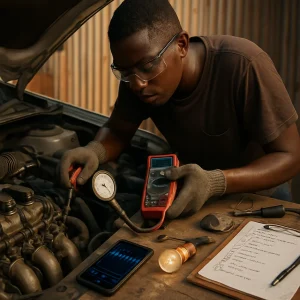
This lesson introduces core petrol (gasoline) engine technologies, ignition and fuel delivery systems, and practical diagnostic methods tailored for resource‑constrained African field conditions. It balances concise theoretical grounding with hands‑on, low‑cost techniques so learners develop safe, practical skills to inspect, test and service gasoline engines using locally available tools and materials.
Learning in this lesson emphasizes:
- Understanding how petrol engines operate and how their major components interact.
- Recognising the functions and fault modes of ignition and electronic control systems.
- Identifying cylinder charge control methods (VVT, EGR) and their effects on performance and emissions.
- Safely servicing Gasoline Direct Injection (GDI) systems with attention to common failure modes and affordable testing approaches.
- Applying basic fuel delivery and emissions inspection techniques appropriate for fieldwork with limited diagnostic equipment.
Intended learners: beginner automotive technicians working in low‑resource African environments. No specialist laboratory equipment is required; the lesson demonstrates practical alternatives, safe improvised methods, and how to prioritise repairs when parts or tools are limited.
Lesson objectives
- Describe the principal components and operating cycle of petrol engines and how ignition and fuel systems interact.
- Explain the operation and electronic control of modern ignition systems and basic engine management sensors and actuators.
- Identify the purpose and common faults of VVT and EGR systems and perform simple functional checks.
- List the main GDI components, common failure symptoms, and low‑cost cleaning/inspection methods suitable for field servicing.
- Perform basic fuel delivery and emissions checks using affordable tools and systematic diagnostic procedures; document findings and recommend safe corrective actions.
Topics and brief coverage
-
Petrol engine operation and components
- Four‑stroke cycle, major components (cylinder, piston, valves, camshaft, crankshaft, intake/exhaust).
- Compression, combustion, power delivery and common mechanical faults.
- Practical checks: visual inspection, basic leak and wear recognition, low‑cost compression testing principles and precautions.
-
Ignition systems and electronic controls
- Conventional vs. distributorless and coil‑on‑plug systems; primary/secondary ignition circuits.
- Sensors (crank/cam position, knock) and actuators; basics of Engine Control Unit (ECU) logic.
- Field diagnostics: spark testing, basic multimeter checks, simple oscilloscope alternatives, safely verifying ignition timing and coil operation.
-
Cylinder charge control (VVT, EGR)
- Purpose and operation of Variable Valve Timing and Exhaust Gas Recirculation systems.
- Symptoms of malfunction, impact on torque, fuel consumption and emissions.
- Low‑cost functional checks and diagnostic sequences using vacuum tests, visual inspection, and straightforward electrical checks.
-
Gasoline Direct Injection (GDI) servicing
- Distinctions between port injection and GDI; high‑pressure system components and safety considerations.
- Common issues: injector fouling, high‑pressure pump failures, deposits and misfire causes.
- Field‑oriented servicing: safe depressurisation procedures, injector flow and leak checks with low‑cost rigs, and options for cleaning or replacing injectors when professional equipment is unavailable.
-
Fuel delivery and emissions basics
- Fuel pump, filter, pressure regulation, return systems, and emission control elements (catalytic converter, O2 sensors).
- Simple methods to assess fuel delivery, filter condition and visible emissions; interpreting smoke colour and exhaust scent as diagnostic clues.
- Practical, low‑cost emissions awareness: how to prioritise repairs to reduce harmful outputs and meet local regulatory requirements.
Teaching and learning methods
- Short theoretical presentations for core principles followed by instructor‑led demonstrations.
- Hands‑on practicums using inexpensive, durable tools and improvised test fixtures where safe and appropriate.
- Guided troubleshooting exercises structured as symptom → inspection → measurement → action.
- Group problem solving to adapt methods to local vehicle types and available resources.
Assessment and competency verification
- Practical assessments: perform basic ignition, fuel delivery and charge control checks; record and interpret results.
- Short written or oral quiz on system functions and safety.
- A capstone practical task: diagnose a common petrol engine fault using low‑cost methods and submit a service plan with safety considerations.
Safety, environmental and ethical considerations
- Emphasise personal protective equipment (gloves, eye protection) and safe handling of fuels, batteries and pressurised systems.
- Strict procedures for depressurising fuel systems and isolating ignition sources before work.
- Environmentally responsible disposal of fuels, filters and contaminated materials; awareness of emissions impact and legal obligations.
- Ethical practice in recommending cost‑effective, safe repairs and honest communication with customers about limitations when specialist tools are not available.
Resources and tools (examples of low‑cost / locally available options)
- Basic hand tools, service manual pages or manufacturer data, multimeter, portable vacuum gauge or improvised water manometer, spark tester, fuel pressure gauge (or borrow/construct from salvaged parts), mirror and inspection lamp, basic cleaning solvents and brushes.
- Smartphone apps and low‑cost adapters for basic waveform viewing or data logging where available.
- Checklists and fault‑finding flowcharts designed for rapid field use.
Prerequisites and estimated duration
- Prerequisite: basic mechanical principles and workshop safety (from earlier AUTO_1 lessons).
- Estimated lesson duration: 6–10 hours (combining theory, demonstrations and hands‑on practice), adjustable to available workshop time and learner pace.
By the end of this lesson learners will be able to identify core petrol engine management components, perform basic, safe diagnostic tests, and apply low‑cost servicing methods appropriate to field conditions, while prioritising safety and environmental responsibility.