

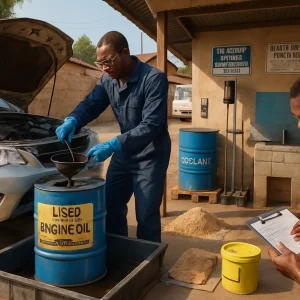
Topic: Practical strategies to reduce pollution, manage workshop waste (oil, coolants, filters), and implement low‑cost sustainable practices in local workshops
Purpose and learning outcomes
After studying this topic workshop leaders and trainees will be able to:
- Understand the ethical and legal obligations for preventing pollution and protecting community health.
- Implement low‑cost, practical measures to reduce waste generation and pollution in small automotive workshops.
- Apply safe handling, storage, collection and disposal procedures for used oil, coolants/antifreeze, filters, batteries and other common wastes.
- Establish simple spill response, monitoring and record‑keeping procedures appropriate to resource‑constrained contexts.
- Build partnerships and low‑cost recycling/reuse pathways to reduce disposal costs and environmental impact.
Context and ethical obligations
Automotive workshops are essential to local economies but are also a common source of soil, groundwater and air contamination when wastes are handled poorly. Ethical and professional responsibilities include:
- Protecting the health of employees, neighbours and the environment.
- Avoiding practices that contaminate watercourses, soil or public spaces.
- Complying with national and municipal environmental laws and waste‑management regulations; where regulations are unclear, adopt internationally accepted best practices and seek local authority guidance.
- Acting transparently with records, signage and community engagement.
Note: Always check local regulations for hazardous waste classification and approved disposal routes. Where conflicts arise, contact local environmental agencies, municipal offices or accredited recyclers.
Basic principles to guide practice
- Prevent: reduce waste at source by changing work habits and materials.
- Segregate: separate waste streams (used oil, coolant, filters, batteries, paint, solvents, general waste) to enable safe handling and recycling.
- Contain: prevent leaks and runoff with simple bunding and impermeable surfaces.
- Recover: reuse and recycle where safe and allowed.
- Dispose: use authorised hazardous‑waste handlers when recovery is not feasible.
- Record: keep simple records of quantities, handlers and destinations.
Practical strategies (low‑cost, locally applicable)
1. Waste reduction (source control)
- Minimise purchases of excess materials; buy in containers sizes matched to usage.
- Prefer reusable and low‑toxicity products: water‑based cleaners, low‑VOC paints, reusable cloths instead of disposable rags where cleaning methods permit.
- Schedule preventative maintenance (tune, adjust, replace filters on schedule) to reduce fluid contamination and loss.
- Train technicians to use funnels, drain pans and accurate measuring to reduce spills and over‑pouring.
2. Simple workshop layout and containment
- Create defined work zones: engine bay, oil change area, wash area, storage/bunding area for wastes.
- Use an impermeable floor or locally available lining (concrete preferred). Where concrete is not possible, use heavy‑duty plastic sheeting and elevated pallets under drums to reduce soil contact.
- Small, low‑cost bunded areas: use a concrete slab with a shallow perimeter kerb or a bund made from compacted soil lined with heavy polyethylene (minimum 200 µm) to contain spills. Ensure the bund can hold at least 110% of largest container volume.
- Place drums for used oil, coolant and solvents on pallets or stands to keep them off ground and allow inspection.
3. Collection and storage of used oil
- Always drain oil into a clean container (drip tray) with a closeable lid. Use recycled 200 L steel drums or food‑grade IBCs repurposed for waste oil (clearly labelled).
- Allow filters to drain vertically over the drain tray for 12–24 hours to reduce residual oil; collect drained oil into the used‑oil drum.
- Use inexpensive gravity draining racks or purpose‑built simple jigs to allow filter drainage without manual handling.
- Keep oil containers closed and labelled: “Used engine oil — hazardous waste”.
- Avoid mixing used oil with solvents, water or other wastes (mixing makes recycling and disposal much more difficult and often illegal).
Recovery options:
- Identify and contract with a licensed used‑oil collector or recycler. Many urban centres have aggregators who pay a small amount for used oil.
- Where collectors are not available, consider community or cooperative collection points to aggregate volumes for sale.
- Burning used oil as fuel is regulated and can produce toxic emissions — do not burn unless in an approved burner and compliant with regulations.
4. Handling and disposal of oil filters
- After draining, store drained filters in a sealed metal bin or drum labelled “Used filters”.
- Where possible, separate metal from non‑metal components for recycling; many scrap metal buyers accept drained filters.
- Keep a simple manual press or gravity arrangement for additional draining if local recyclers require less residual oil.
- If a recycler is not available, arrange for filters to be sent to municipal hazardous waste facilities. Do not burn or bury filters.
5. Coolants (antifreeze) management
- Collect engine coolant in dedicated, sealed containers. Never pour coolant to drains or onto ground.
- Avoid mixing coolant with other wastes. Antifreeze often contains ethylene glycol (toxic); handled as hazardous waste.
- Reuse/recycle options:
- Some regions have glycol recovery services; contract them.
- Where small volumes exist, set up a labelled, sealed storage drum for collection and delivery to approved handlers.
- Spill neutralisation: contain coolant with absorbents (sand, sawdust) and collect for disposal. Do not use absorbents that will be disposed of in open burning.
6. Batteries
- Store lead‑acid batteries upright on an impermeable surface inside a covered area, away from direct heat and sunlight.
- Keep batteries on pallets and within a bunded or contained area to manage accidental leaks.
- Neutralise acid spills immediately with sodium bicarbonate (baking soda), then collect the neutralised slurry for appropriate disposal.
- Lead‑acid batteries are widely recyclable; identify local battery recyclers or electricians who collect used batteries.
7. Solvents, paints and other liquids
- Substitute water‑based cleaners where feasible. Limit quantity of solvents on site.
- For paints and varnishes, buy only what you will use and store in tightly closed containers.
- Collect spent solvents in labelled drums. Solvent recycling is hazardous (distillation) and should be undertaken only by licensed facilities.
- Absorbent materials contaminated with solvents must be treated as hazardous waste; avoid open burning.
8. Tyres, scrap metal and other solids
- Tyres: promote retreading, reuse in community projects (bench seats, planters) or collect for tyre recyclers.
- Scrap metal: segregate clean scrap (steel, aluminium, copper) and sell to scrap dealers. Keep oily scrap separated and cleaned when possible.
- Used rags and cloths contaminated with oil/solvent should be stored in metal bins with lids; consider contractor laundering or disposal by authorised handlers.
9. Spill response (basic procedure)
- Stop the source of the spill if it is safe to do so.
- Contain the spill with absorbent material (sand, sawdust, commercial absorbents or even soil as temporary measure) to prevent runoff to drains or soil.
- Protect drains: use drain covers or create temporary berms to divert spill away from storm drains.
- Collect the contaminated absorbent into labelled containers for disposal by an authorised handler.
- Clean the area with minimal water; collect wash water — never let contaminated wash water enter drains.
- Report significant spills to local authorities where required.
- Record incident (date, volume, cause, remedial measure, personnel involved).
10. Wastewater and wash bays
- Avoid discharging wash water to storm drains. Wash bays should drain to an oil/water separator or a sedimentation tank before any discharge.
- Low‑cost options: a two‑chamber settling tank where heavy solids settle in the first chamber and lighter oils rise for skimming in the second. This is a temporary measure — final effluent must meet local requirements.
- Consider reusing wash water for non‑critical cleaning after treatment (settlement and filtration), but only where safe and legal.
11. Emissions and fuel efficiency practices
- Reduce idling and encourage efficient driving/testing practices to lower fuel consumption and exhaust emissions.
- Maintain vehicles and equipment to optimal fuel‑consumption standards (air filter replacement, correct ignition timing, fuel system checks).
- Use proper tyre inflation and alignments to improve fuel efficiency.
12. Energy and water efficiency
- Use natural daylight and ventilation where possible.
- Replace incandescent bulbs with LEDs to reduce electricity costs.
- Collect and reuse non‑contaminated rainwater for wash operations if collected separately from workshop runoff.
- Where feasible and affordable, consider small solar installations for lighting.
Personal protective equipment (PPE) and health
- Minimum PPE for handling fluids and wastes: nitrile or chemical‑resistant gloves, eye protection (goggles), protective overalls, boots resistant to oils and acids, and respiratory protection when handling solvents or creating dust.
- Have first‑aid supplies and an emergency eyewash station or clean water source.
- Provide training and enforce PPE use; document training.
Low‑cost equipment and improvised solutions (safely implemented)
- Drip trays and funnel systems made from repurposed metal pans or plastics for oil changes.
- Used 200 L drums with secure lids for waste storage; clearly label and keep on pallets.
- Simple gravity drain racks for filters to allow 12–24 h draining.
- Pallets and heavy plastic sheets to create temporary bunds or prevent soil contamination.
- Absorbent materials: sawdust, wood shavings, sand or locally available cat litter; store used absorbents in sealed metal containers for disposal.
- Note: improvised solutions must ensure containment and be used only where they do not create new hazards. Avoid unsafe burning, burying or open chemical processing.
Contracts, partnerships and revenue options
- Identify local recyclers and hazardous‑waste collectors. Many pay for used oil, scrap metal and batteries.
- Form cooperatives with neighbouring workshops to aggregate waste volumes — this reduces transport cost and improves bargaining power.
- Approach municipal waste management units for guidance and possible collection services.
- Explore partnerships with vocational training centres and NGOs that run environmental or livelihood programmes.
Training, signage and behaviour change
- Display clear signage for waste bins and storage areas in local language(s).
- Run regular toolbox talks on spill response, PPE use and waste segregation.
- Introduce a simple induction checklist for new employees or apprentices covering environmental procedures.
- Reward and recognise good environmental practice (safe handling, recordkeeping, preventing spills).
Recordkeeping and monitoring (simple templates)
- Keep a Waste Log (paper or spreadsheet) with:
- Date, type of waste, quantity, container ID, origin (vehicle), storage location, final destination (recycler/municipal), signature of handler.
- Keep an Incident Log for spills and near‑misses: date, time, cause, volume, response, lessons learned.
- Monitor monthly: volumes of used oil, coolant, batteries and filters handled; compare to previous months to spot trends and improvements.
- Retain receipts/certificates from recyclers or waste handlers.
Maintenance and inspection schedule (example)
- Daily: check for visible spills, lid security on drums, PPE availability.
- Weekly: inspect storage bunds, condition of drums and labels, check drainage areas.
- Monthly: review waste log, check inventory of absorbents and spill kits, check training records.
- Annually: review contracts with recyclers, audit compliance with local requirements, renew training.
Sample Standard Operating Procedures (SOP) — brief outlines
SOP: Used Oil Handling
- Tools: drip tray, funnel, 200 L sealed drum, labels, PPE.
- Steps: drain oil into drip tray → transfer to labelled drum using funnel → close drum lid → record volume in waste log → store in bunded area pending collection.
SOP: Filter Handling
- Steps: place removed filter over drain rack for 12–24 h → collect drained oil into used oil drum → place filter in labelled metal bin → arrange periodic collection by recycler.
SOP: Small Spill Response
- Steps: Stop source → contain with absorbent → prevent runoff to drains → collect contaminated material into labelled container → wash area with minimal water and collect washings → report if required → record event.
(Develop full SOPs tailored to each workshop and legal context.)
Community engagement and social responsibility
- Inform neighbours of workshop waste procedures and response plans for major incidents.
- Offer to join municipal collection programmes and community environmental schemes.
- Turn some wastes into community benefits (e.g., used tyres for playground borders, cleaned scrap metal for school projects) only after ensuring safety and legal compliance.
Common pitfalls to avoid
- Never pour oil, coolant, solvents or battery acid onto soil, into drains, onto roads or into watercourses.
- Do not mix waste streams; mixing reduces options for recycling and can create dangerous reactions.
- Avoid informal burning of wastes — this creates toxic air emissions and legal risks.
- Do not attempt solvent distillation or chemical recycling without licensed facilities and trained operators.
Final notes and references
- Environmental stewardship in workshops is achievable with low‑cost steps, proper segregation, simple containment and by building local partnerships.
- Prioritise human health and compliance with local law. When in doubt, contact municipal environmental agencies, accredited recyclers or vocational training institutions for assistance.
- Encourage continuous improvement: review procedures periodically and update training as new low‑cost techniques or local services become available.
Suggested local actions (first 30 days):
- Carry out a quick site assessment to map potential contaminant sources and drains.
- Procure labelled drums, lids and simple drip trays; designate a bunded storage area.
- Implement daily checks and immediate staff briefing on spill response and PPE.
- Identify at least one recycler or municipal collection point for used oil and batteries.
- Start a simple waste log and perform first monthly review.
This practical, low‑cost approach will reduce pollution risks, protect worker and community health, and support sustainable workshop operations in resource‑constrained African contexts.