

Learning objectives
- Identify common failure modes and contamination types in fuel supply systems (diesel and gasoline) in resource-constrained settings.
- Perform safe, contamination‑minimizing inspection and cleaning of filters, pumps and lines.
- Replace fuel filters, lift pumps and fuel lines using robust, low‑cost best practices.
- Prime and bleed fuel systems, perform leak and functional checks, and recognize when to defer to specialist services (high‑pressure common‑rail systems).
- Apply safe handling, disposal and record‑keeping suitable for environments with limited workshop infrastructure.
Context
This topic addresses practical, competency‑based procedures adapted to environments where clean workshop facilities and specialist tools may be limited. Emphasis is on contamination control, safety, and methods that use available local resources without compromising system integrity or personal safety. Where manufacturer‑specified tools, consumables or measurements are required (for example, torque settings or rail pressure tests), follow the vehicle manufacturer’s data or defer to a trained facility.
Important safety notes (general)
- Work in a well‑ventilated area. Keep ignition sources, smoking and hot work well away from fuel-handling operations.
- Use appropriate PPE: fuel‑resistant gloves (nitrile or equivalent), chemical‑splash goggles or face shield, long sleeves and flame‑resistant clothing if available.
- Keep a suitable fire extinguisher (dry powder or CO2/AFFF depending on availability) within reach.
- Relieve fuel system pressure before disconnecting lines on gasoline or high‑pressure systems. For common‑rail diesel rail and high‑pressure gasoline direct injection systems, do not attempt internal rail servicing unless trained and equipped; refer to specialist workshops.
- Contain spills immediately and use absorbent material (sand, sawdust) and secure containers for contaminated waste.
Tools and materials (recommended and local alternatives)
- Basic hand tools: wrenches, pliers, screwdrivers, socket set. Torque wrench if available.
- Clean collection containers with lids (metal or thick plastic) for drained fuel.
- Clean lint‑free rags or cotton cloth (avoid dusty fabric).
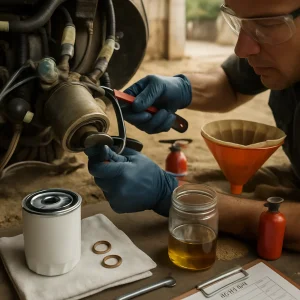
- Funnels with coarse and fine strainers. Fine paper or cloth filters (e.g., new coffee filter or purpose fuel filter paper) for preliminary filtering of recovered fuel.
- Hand primer pump or in‑line primer bulb (if fitted). Small manual vacuum/hand pumps can help bleed systems.
- New OEM or equivalent fuel filters (primary and secondary), fuel hose rated for fuel (fuel hose markings), replacement clamps and sealing washers (copper crush washers for banjo bolts).
- Small container of clean fuel for priming, and a supply of clean water‑free diesel/gasoline for rinsing surfaces.
- Container for used filters and contaminated fuel; sealable bags/containers for disposal.
- Inspection lamp, magnifying glass.
- Simple pressure gauge and adapter only if trained in pressure testing and have correct fittings for the system. Never connect gauge to high‑pressure rail without correct adapter and training.
Inspection — visual and basic functional checks
-
Visual inspection
- Fuel lines: look for cracking, swelling, external abrasions, fuel staining at joints, chafing points and evidence of heat damage.
- Clamps and fittings: inspect for corrosion, loose clamps, missing sealing washers or distorted banjo/pipe ends.
- Filters and housings: check for dents, rust, leaking seals, loose mounting or fuel seepage around base.
- Pump body and electrical connections: inspect for oil/fuel leaks, damaged connectors, frayed wires and mounting integrity.
-
Functional clues (symptoms of fuel supply problems)
- Hard starting, long cranking, loss of power, surging or hesitation, excessive white/black smoke, unusual fuel odors or visible drips.
- Audible air or cavitation noises from lift pump; irregular pump sound.
- Presence of water in fuel (milky emulsion in gasoline, separated water at bottom of sediment bowls for diesel), visible sediment, or very dark/contaminated fuel.
-
Simple fluid checks
- Drain small sample from filter drain or sediment bowl into clear container, allow to settle. Water separates from diesel and sinks; gasoline contamination may be harder to see but look for cloudy or particulate matter.
- Smell test for unusual odors, but avoid inhalation.
Contamination control — principles and practical steps
- Create a clean zone: clear the immediate work area of loose dirt, cover nearby openings with clean plastic or cloth to prevent ingress.
- Cap and plug: immediately cap fuel lines and openings after disconnect to prevent contamination. Use clean tubing or sealed plastic bags and tape if caps are not available.
- Use clean containers with tight lids for any drained fuel. If reusing fuel, filter it through progressively finer media (coarse strainer → cloth → paper filter) and confirm absence of water.
- Minimise component exposure time. Prepare replacements and tools before opening the system.
- Clean tools and wiping cloths: keep a dedicated clean rag for wiping internal sealing surfaces; avoid using heavily soiled shop rags.
- Avoid blowing internal components with compressed air unless the air supply is filtered and dry; compressed air can drive dust into crevices.
Filter inspection and replacement — step‑by‑step (general procedure)
Note: Primary and secondary filters differ in role. Primary (sediment/water separator or pre‑filter) removes coarse contaminants and water; secondary/injector filters remove fine particles.
Preparation
- Gather new filter(s), sealing rings/gaskets, drip tray, clean fuel for priming, caps/plugs for open lines, and tools.
- Relieve system pressure: for diesel lift systems this may simply be turning off electric pump and cranking to relieve; for gasoline systems, follow the manufacturer procedure (fuel pump fuse removal and cranking or using pressure relief valve). Always follow vehicle-specific guidance.
- Disconnect battery negative terminal for additional safety on vehicles with electric pumps.
Procedure
- Place drip tray and containers to catch fuel. Protect surrounding surfaces with absorbent material.
- Cap or plug fuel lines immediately after opening. Label hoses if needed to ensure correct reconnection.
- Loosen and remove filter following manufacturer direction (direction of unscrewing). For spin‑on filters, use an appropriate strap wrench.
- Inspect old filter:
- Cut open spin‑on cartridge only if necessary and safe to determine contamination type. Note colour, smell, and presence of water or metal filings.
- Check the filter seating surface and O‑ring groove for debris, corrosion or old gasket material.
- Clean filter mounting surface with a clean cloth and a small amount of clean fuel (not with solvents that leave residues).
- Prepare new filter:
- Lightly lubricate rubber O‑ring with clean fuel (do not use petroleum grease).
- For spin‑on filters, fill with clean fuel if recommended (helps reduce cranking time on diesel).
- Install new filter hand‑tight plus manufacturer recommendation (usually hand tight ± 3/4 turn). Use torque wrench only when specified.
- Reconnect any lines and tighten clamps/fittings ensuring sealing washers are new where required (banjo bolts, etc.). Avoid overtightening; use manufacturer torque where available.
- Prime and bleed the system (see priming/bleeding section below).
- Start engine and inspect for leaks around filter housing and associated fittings. Recheck after a short run and after 24 hours or first service drive.
Notes on filter selection and local sourcing
- Always fit filters rated for the application (diesel vs gasoline), with correct micron rating. When OEM filters are not available, select reputable aftermarket filters that state compatibility.
- In low‑resource settings, genuine or OEM filters are preferred. If unavailable, source filters from reputable suppliers; avoid used or visibly damaged filters.
Fuel pump inspection and replacement — practical guidance
Caution: Do not attempt to disassemble or expose high‑pressure common‑rail or direct‑injection pumps. Replacement of the pump assembly and associated priming/bleeding is acceptable if you have the correct parts and training.
Preparation and safety
- Disconnect battery negative terminal.
- Relieve fuel pressure and drain fuel as needed into sealed containers.
- Label and cap all open fuel lines and electrical connectors to prevent contamination and misconnection.
Removal
- Remove mounting hardware and note bracket positions; photograph or label for reassembly.
- Carefully disconnect fuel lines: use appropriate wrenches and protect line ends with clean caps immediately.
- Disconnect electrical connectors and vacuum hoses, noting routing.
- Remove pump assembly and inspect mounting surfaces and drive coupling for wear.
Replacement and installation
- Replace all gaskets/seals and O‑rings with new parts to prevent leakage.
- Clean mounting surfaces; avoid abrasive or contaminating cleaners.
- Install pump with all fasteners hand‑started and torqued to specification if available.
- Reconnect fuel lines using new sealing washers where applicable. Replace old rubber hoses if hardened or cracked.
- If filter(s) upstream or downstream are present, replace them as part of the pump service.
- Prime the system and perform leak checks and functional testing (see below).
Testing fuel pump function
- For low‑pressure lift pumps you can perform a simple flow test: disconnect return or use a vent to measure steady fuel flow and absence of air.
- For injection systems, verify fuel pressure at the test port using a correct pressure gauge and adapter. If you cannot perform a safe pressure test, inspect for correct starting, no air ingestion, and absence of leaks.
- If pump does not deliver fuel, check electrical supply (voltage at pump connector), ground, and control relays/fuses before removing pump again.
Fuel line inspection and replacement (hoses, clamps, hard lines)
Inspection
- Check hose grade marking: “Fuel”, “SAEJ30R7”, or specific manufacturer markings indicate fuel compatibility. Replace hoses that are cracked, swollen, soft, or heat‑damaged.
- Inspect hard lines for dents, kinks, corrosion, and loose fittings.
- Examine clamp types: worm drive clamps are acceptable for low pressure but do not rely on them for high‑pressure lines; use factory clamps or approved crimp designs where required.
Replacement procedure
- Mark and photograph routing before removal.
- Replace rubber hoses with fuel‑rated hoses of correct diameter and material. Avoid using garden hoses, refrigeration lines, or other non‑fuel rated hoses.
- Use new clamps appropriate to the pressure: OEM/crimp clamps for high pressure or return lines; stainless worm clamps for low‑pressure vent lines only.
- For banjo/bolt connections, always use new crush washers and tighten to specification.
- Ensure hoses are not in contact with sharp edges or hot surfaces; use self‑adhesive heat sleeves or reroute where necessary.
Priming and bleeding fuel systems (diesel and gasoline)
- Diesel systems: Many diesel engines have a manual primer pump or bleed screws on filter housings. Operate the primer until no air bubbles appear in the transparent feed line or until firm pressure is felt. Crank the engine intermittently to help remove trapped air.
- Gasoline systems: After replacing filters or lines, cycle the ignition (with pump fuse removed/installed per manufacturer) to run the pump and pressurize the system, then check for leaks. Use manufacturer procedure to purge air from injectors.
- Bleeder screws: open slightly and operate primer until clean fuel flows without air bubbles, then close while maintaining pressure.
- Start engine only when confident the system is primed. Expect several crank cycles; avoid prolonged cranking to prevent starter damage.
Leak testing and final functional check
- After priming, inspect all joints, hoses, banjo bolts and filter housings for leakage while engine is cranking and after it starts.
- Observe engine running for irregular idle, misfire, or hesitation which may indicate remaining air or contamination.
- Recheck reinstalled components after a short test drive and again after the first day of operation.
Special considerations for high‑pressure/common‑rail diesel and gasoline direct injection (GDI)
- High‑pressure rails and injectors operate at extremely high pressures (hundreds to thousands of bar). Do not loosen high‑pressure fittings or attempt rail servicing without proper high‑pressure fittings, gauges, PPE and training.
- If a problem appears to be in high‑pressure components (leaks on rail, injector removal required), secure vehicle and seek specialist service.
Troubleshooting quick guide
- Symptom: Hard starting / long cranking
- Check: clogged primary filter, air in system, weak lift pump, contaminated fuel.
- Symptom: Loss of power / surging
- Check: partially blocked secondary filter, clogged injectors (contamination), failing pump.
- Symptom: Visible fuel leaks or smell of fuel
- Check: loose fittings, damaged hose, failed seal or O‑ring.
- Symptom: Pump noisy / cavitating
- Check: air leak on suction side, clogged intake, low fuel level.
- Symptom: Water in fuel (diesel)
- Check: failed water separator drain, contaminated storage, faulty filters.
Disposal and environmental considerations
- Collect used filters and contaminated fuel in sealed containers. Do not pour fuel or contaminated washings onto the ground or into drains.
- Absorb spills with sand or sawdust and place in sealed bags/containers for disposal according to local regulations.
- If no formal hazardous waste service exists, store collected waste securely and arrange for centralized disposal or follow manufacturer/local authority guidance to minimize environmental harm.
Use of improvised or local materials — guidance and cautions
- Acceptable improvised aids:
- Clean metal or thick plastic containers with lids for fuel collection.
- Fine cloth or paper filters for preliminary filtering of recovered fuel (filter progressively).
- Plastic caps, clean tape and bags for sealing disconnected lines temporarily.
- Not acceptable:
- Use of non‑fuel rated hoses (garden hose, non‑rubber tubing) for fuel lines.
- Reuse of old sealing washers/banjo washers.
- Attempting to open high‑pressure pumps/rails or perform injector bench servicing without certified equipment.
- When using locally made clamps or fittings, ensure materials are compatible with fuel chemistry and rated for the pressure and temperature ranges expected.
Preventive maintenance and record keeping
- Maintain a logbook for each vehicle listing filter change dates, pump services, fuel quality incidents, and observations of contamination.
- Schedule regular visual inspections and routine filter changes based on operating environment (dusty/wet conditions require shorter intervals).
- Train operators to use dedicated containers and fueling procedures to minimize introduced contaminants (clean funnels, keep tank necks clean, avoid topping up from questionable jerrycans).
Quick checklists (for workshop use)
Inspection checklist
- Visual condition of hoses, clamps, fittings — OK / Replace
- Filter housing and drain — sediment or water present?
- Fuel sample clear of water/visible particles?
- Electrical connections to pump secure and corrosion‑free?
- Evidence of fuel leaks at startup or after running?
Replacement checklist
- New filter and O‑rings present and correct type
- New sealing washers for banjo/bolts
- Correct fuel‑rated hoses/clamps available
- Clean fuel for priming available
- Caps, plugs and drip trays ready
- Fire extinguisher and spill absorbent at hand
Final notes
- Always follow the vehicle manufacturer’s service manual for torque settings, pressure testing points and component part numbers when available.
- When in doubt about high‑pressure systems or signs of internal injector/pump failure (metallic debris, severe contamination), stop further in‑field servicing and arrange transfer to a specialist workshop to prevent catastrophic damage and ensure safety.
- Emphasize training, documentation and contamination control in ongoing local technician training to progressively increase competence within resource‑constrained environments.
End of topic.