-
From Theory to Plan: Translating Principles into Lessons32 Topics
-
Active Learning Strategies44 Topics
-
Differentiation and Personalized Learning5 Topics
-
Formative Assessment: Techniques and Use4 Topics
-
Classroom Management: Routines, Procedures and Environment5 Topics
-
Collaborative Learning and Group Work6 Topics
-
Questioning, Feedback and Scaffolding5 Topics
-
Technology Integration and Digital Activities6 Topics
-
Inclusive Practices: Equity, ELL and SEN Strategies7 Topics
-
Reflection, Action Research and Professional Growth4 Topics
Participants 3

Teacher reflection prompts (post-lesson)

didactec 28.11.2025
Lesson Progress
0% Complete
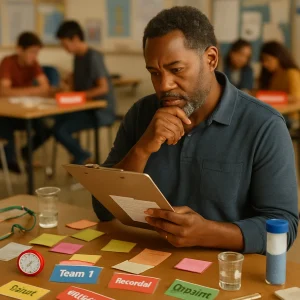
- Which misconceptions persisted despite station activities?
- Which students demonstrated conceptual transfer? Which did not — why?
- What adjustments to timing, safety or materials would improve the lesson next time?
- How did group roles affect participation — rotate roles next time?
Appendix: Quick student prompts and guiding questions
- Observation prompts: “Record 3 measurable changes (temperature, time, movement) you see.”
- Guiding thinking prompts: “How did energy move from A to B? What material properties mattered? What design change would reduce heat transfer here?”
- Exit ticket example (3–2–1): 3 things I learned; 2 ways this matters at home; 1 question I still have.
This sequence converts concise theory into a classroom-ready, 50-minute active lesson that emphasises direct demonstration, structured hands-on stations and a short synthesis task to secure learning. Use the templates, station cards and rubrics above as a ready-to-use package; adapt materials and cognitive demands to grade level and available resources.