-
From Theory to Plan: Translating Principles into Lessons32 Topics
-
Active Learning Strategies44 Topics
-
Differentiation and Personalized Learning5 Topics
-
Formative Assessment: Techniques and Use4 Topics
-
Classroom Management: Routines, Procedures and Environment5 Topics
-
Collaborative Learning and Group Work6 Topics
-
Questioning, Feedback and Scaffolding5 Topics
-
Technology Integration and Digital Activities6 Topics
-
Inclusive Practices: Equity, ELL and SEN Strategies7 Topics
-
Reflection, Action Research and Professional Growth4 Topics
Participants 3

Classroom management & logistics tips

didactec 28.11.2025
Lesson Progress
0% Complete
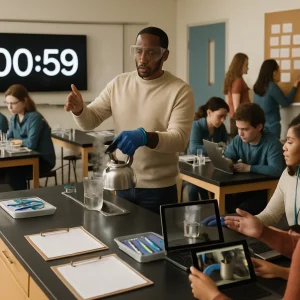
- Set clear time signals (timer visible) and rotation routine practiced once beforehand.
- Use roles to reduce idle time and enhance accountability.
- Prep duplicate data sheets to minimize transition delays.
- Have backup materials (extra thermometers, batteries).
- Safety plan: explicit hot-water protocol and demonstration of proper handling.
Common pitfalls & backup plans
- If time runs short: collapse synthesis + reflection by having groups post single-sentence CER on a shared wall and students perform a silent gallery walk.
- If equipment fails: swap to observation-only station (video demo + data set) or use teacher-led demonstration to replace a station.
- If students go off-task: call a 60-second regroup — ask each group to state one observation aloud (re-engages attention).
Virtual / hybrid adaptation
- Demo can be streamed live; students complete virtual stations with provided videos and data sets.
- Use breakout rooms for station discussions; share digital data sheets (Google Forms).
- Synthesis: students submit CER to LMS; teacher provides rapid formative comments.