-
From Theory to Plan: Translating Principles into Lessons32 Topics
-
Active Learning Strategies44 Topics
-
Differentiation and Personalized Learning5 Topics
-
Formative Assessment: Techniques and Use4 Topics
-
Classroom Management: Routines, Procedures and Environment5 Topics
-
Collaborative Learning and Group Work6 Topics
-
Questioning, Feedback and Scaffolding5 Topics
-
Technology Integration and Digital Activities6 Topics
-
Inclusive Practices: Equity, ELL and SEN Strategies7 Topics
-
Reflection, Action Research and Professional Growth4 Topics
Participants 3

Monitoring, correcting progress, and feedback routines

didactec 28.11.2025
Lesson Progress
0% Complete
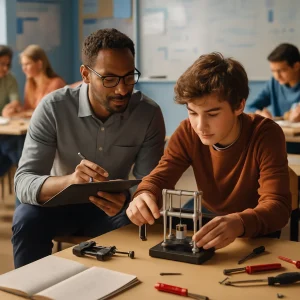
- Use micro-conferences: 60–90 seconds per group to check understanding, correct misconceptions, and push higher-order thinking (Why did that happen? How would you improve it?).
- If you detect systematic errors, break the group work briefly and:
- Address whole class (if everyone has same error), or
- Pull aside specific groups for a quick focused reteach (2–4 min).
- Keep correction constructive: describe the issue, model the fix, and ask a student to try the corrected step.
- Record formative observations in a short teacher log to adjust next lesson.
Feedback script examples:
- Affirmation + Diagnostic: “Great data recording — your test log is clear. I notice your load dropped suddenly — did the failure start at a joint? Try reinforcing that joint and retest.”
- Socratic prompt: “What variable most likely affected your result? How could you isolate it?”