-
From Theory to Plan: Translating Principles into Lessons32 Topics
-
Active Learning Strategies44 Topics
-
Differentiation and Personalized Learning5 Topics
-
Formative Assessment: Techniques and Use4 Topics
-
Classroom Management: Routines, Procedures and Environment5 Topics
-
Collaborative Learning and Group Work6 Topics
-
Questioning, Feedback and Scaffolding5 Topics
-
Technology Integration and Digital Activities6 Topics
-
Inclusive Practices: Equity, ELL and SEN Strategies7 Topics
-
Reflection, Action Research and Professional Growth4 Topics
Participants 3


Lesson Progress
0% Complete
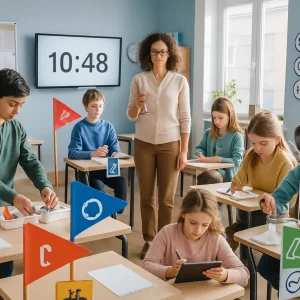
- Seating/layout: arrange clear physical “islands” or numbered corners; provide visible station signs.
- Timing: 8–15 minutes per station for a standard lesson; 10–12 minutes is a good default.
- Transition routine: 30–90 seconds. Use auditory cue (chime) + visual timer on screen. Teach and rehearse transitions.
- Roles at each station: Materials Manager, Timekeeper, Recorder/Reporter, Lead Experimenter/Designer. Rotate roles each rotation.
- Noise/behavior norms: levels posted per station (e.g., whisper/working voice/presenting).
- Safety: post hazards and PPE requirements at relevant stations (STEM: goggles, hot glue cautions).
- Technology: set expectations for device use (one person uses tablet to photograph; all must keep documentation).
- Repeat new method at least four times before deciding whether to keep or adapt it.