-
From Theory to Plan: Translating Principles into Lessons32 Topics
-
Active Learning Strategies44 Topics
-
Differentiation and Personalized Learning5 Topics
-
Formative Assessment: Techniques and Use4 Topics
-
Classroom Management: Routines, Procedures and Environment5 Topics
-
Collaborative Learning and Group Work6 Topics
-
Questioning, Feedback and Scaffolding5 Topics
-
Technology Integration and Digital Activities6 Topics
-
Inclusive Practices: Equity, ELL and SEN Strategies7 Topics
-
Reflection, Action Research and Professional Growth4 Topics
Participants 3


Lesson Progress
0% Complete
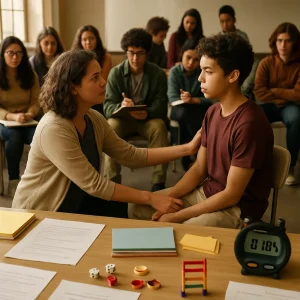
- Model one round with teacher and a volunteer before releasing groups.
- Script anchor questions for novice students (both for witnesses and attorneys).
- Use observers’ feedback to minimize teacher interruption and increase peer assessment.
- Rotate roles across four sessions before judging a method’s effectiveness — practice 4 times to reach reliable results.
- Keep artifacts (student notes, verdict forms) to compare pre/post performance.
Quick tools for exit and formative checks
- 3‑2‑1: 3 things learned, 2 applications, 1 unanswered question.
- Information Ladder: 1) know, 2) understand, 3) use, 4) noticed similarities/differences.
- Dice feedback: students roll to answer one of six scaffolded reflection prompts.
- One‑minute round: each student gives a 60‑second takeaway.
Simulations and roleplay convert abstract theory into embodied practice. With minimal prep and the structured debrief above, teachers can create rigorous, repeatable learning experiences that build empathy, reasoning and real-world competence — and use the same case as a reliable measure of student growth across a course. Apply, reflect and iterate: the method gets stronger every cycle.