-
From Theory to Plan: Translating Principles into Lessons32 Topics
-
Active Learning Strategies44 Topics
-
Differentiation and Personalized Learning5 Topics
-
Formative Assessment: Techniques and Use4 Topics
-
Classroom Management: Routines, Procedures and Environment5 Topics
-
Collaborative Learning and Group Work6 Topics
-
Questioning, Feedback and Scaffolding5 Topics
-
Technology Integration and Digital Activities6 Topics
-
Inclusive Practices: Equity, ELL and SEN Strategies7 Topics
-
Reflection, Action Research and Professional Growth4 Topics
Participants 3


Lesson Progress
0% Complete
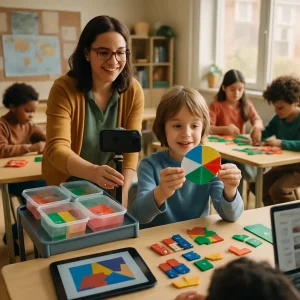
- Pre‑assemble kits and label them. Time saved during class = deeper learning time.
- Photograph student outputs; archive in LMS for later formative use and parent communication.
- Try each new manipulative method at least four times before discarding or adopting permanently.
- Use tech as amplifier, not replacement: smartphone video for motion analysis; OneNote for shared math work; GeoGebra for fraction visuals.
Quick resource list (recommended)
- Virtual manipulatives: PhET Interactive Simulations; National Library of Virtual Manipulatives
- Fraction tiles and circles: widely available low‑cost kits
- Video analysis: free apps (Phyphox; Tracker video analysis)
- Classroom management & active learning references: Vygotsky, Piaget, Ausubel
Hands‑on tasks anchor abstract thinking to experience, accelerate formative diagnosis, and develop transferable 21st‑century skills (problem solving, collaboration, communication). Use clear objectives, short instruction bursts, purposeful roles, formative checkpoints, and reflective consolidation to translate manipulative activities into reliable and measurable learning gains. Be bold: try a new manipulative method, iterate it at least four times, gather evidence, and adapt — the classroom becomes a laboratory for thinking.