-
Welcome to Top Teacher Theory7 Topics
-
How People Learn24 Topics
-
Understanding Learner Development17 Topics
-
Differentiation and Personalization35 Topics
-
Assessment for Learning21 Topics
-
Data-Informed Teaching and Professional Growth27 Topics
-
Designing Competence-Focused Curriculum31 Topics
-
Feedback, Reflection and Metacognition15 Topics
-
Classroom Practice and Management22 Topics
-
The Capstone - Theory into Practice7 Topics
Participants 3



Learning isn’t one-size-fits-all. Every student comes to the classroom with a unique mix of abilities, experiences and preferred ways of learning — and those differences shape how quickly and deeply they develop skills and competences. This topic pulls together ideas from Piaget, Vygotsky, Ausubel, Kolb and modern brain research (plus practical classroom-tested tips) so you can plan lessons that actually reach each learner.
Below I’ll walk through three big drivers of individual differences — aptitude, prior knowledge, and learning preferences — explain why they matter, and give clear, practical strategies you can use right away.
1) Aptitude — what it is (and what it isn’t)
Aptitude is often thought of as a student’s “natural ability” or talent for certain tasks (e.g., math reasoning, reading, spatial skills). But two important realities from research and brain science:
- Aptitude is not fixed. Brain research shows experience and learning reorganize the brain. Early potentials can be developed with the right environment, practice and challenge.
- Aptitude interacts with emotion and context. A “high-aptitude” student who feels rejected or anxious will underperform; a lower-aptitude student with strong self-esteem and motivation can excel.
Practical classroom moves
- Don’t assume ability from appearance or past grades. Use quick diagnostics (see below).
- Challenge students within their zone of proximal development (ZPD) — tasks should be doable with supports but still require stretch.
- Focus on growth: praise effective strategies and effort, not only outcomes. Build a culture where trying and struggling are valued.
2) Prior knowledge — the single most powerful predictor of learning
Ausubel, Piaget and constructivist research all point to the same thing: new learning is anchored to what the student already understands. Without an anchor (a relevant schema), students can’t assimilate new material — or they learn it superficially.
Why it matters
- Students with rich prior knowledge can operate at a higher cognitive level with the same task.
- When content is too familiar students can be passive; when it’s totally novel they can’t connect it — both harm learning.
- Piaget suggested assimilation (fit into existing schemata) and accommodation (adjust schema). Teaching should purposefully enable both.
How to handle prior knowledge in practice
- Start lessons with a short diagnostic: K-W-L, concept map, 2-minute write, or a few targeted multiple-choice items.
- Use advance organizers (Ausubel): give a high-level overview that highlights key structures and relationships before diving into details.
- Link new content explicitly to students’ experiences and real-life examples.
- Offer bridging tasks for students who lack the needed background (scaffolds, worked examples, concept frames).
- Avoid assuming prior knowledge is uniform across the class — design entry-level supports and extensions.
Example activity
- Before a science lab on forces, ask students to sketch what happens when you push a toy car on different surfaces. Discuss sketches, correct misconceptions, then run experiments. That brief activation primes schemata and makes the lab meaningful.
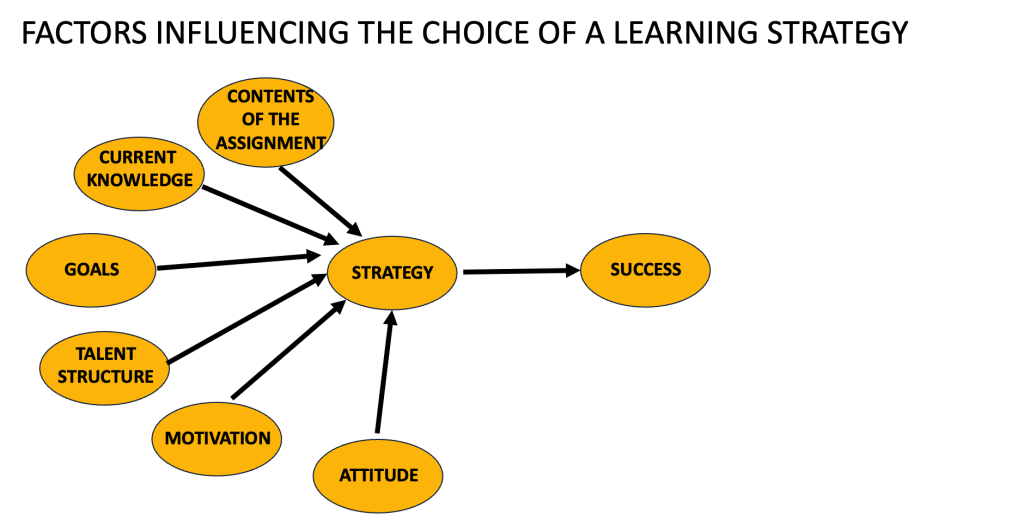
3) Learning preferences and styles — useful, but don’t overplay them
Kolb’s experiential learning cycle (Concrete Experience → Reflective Observation → Abstract Conceptualization → Active Testing) and his four styles (Diverging, Assimilating, Converging, Accommodating) are practical ways to think about how students prefer to learn:
- Accommodators (activists): learn by doing, trial-and-error
- Divergers (reflective + feeling): like brainstorming, seeing multiple perspectives
- Assimilators (theorists): prefer conceptual models and logical organization
- Convergers (pragmatists): like applying theory to solve problems
Important caveats
- “Learning styles” are preferences, not immutable categories. Students can and should learn via other modes.
- Extreme reliance on a single mode (e.g., always lecturing) disadvantages many learners and reduces deep learning.
- Use Kolb as a design tool: cycle learners through experience, reflection, abstraction and testing to deepen learning.
Practical strategies to honor preferences while promoting growth
- Vary your activities across lessons: hands-on labs, reflective journals, small-group discussions, conceptual summaries, and practical problem solving.
- Include reflection phases and group debriefs — social reflection strengthens learning (Vygotsky, Kolb, brain research).
- Teach students meta-skills: how to learn in different ways (metacognition, metamemory). Model different approaches and ask which worked.
- Create mixed-style groups intentionally so students can observe and practice approaches they don’t normally use.
Subject-based tip
- Some tasks favor certain modes: math and stepwise problem-solving often suits serial/assimilative strategies; history and literature benefit from holistic and divergent processing. Teach students to choose strategies for the task.
4) How these three factors interact in real classrooms
- A student with high aptitude but weak prior knowledge can still struggle — you must build bridges.
- A student with solid background but low self-esteem and poor teacher interaction may underperform (research on teacher–student interaction shows self-esteem and motivation strongly influence outcomes).
- Learning preferences shape which entry point will engage a student, but long-term growth comes from cycling through multiple modes (Kolb).
Concrete example
- Teaching algebra to a mixed class:
- Diagnose prior knowledge with quick mental arithmetic or a problem-solving prompt.
- Give a concrete example (graphing a real scenario), let students experiment (hands-on or software), pause for reflective discussion, introduce the symbolic rules (abstract), and finish with practical problems to apply (active testing).
- Provide scaffolded supports for students without prior exposure (worked steps, vocabulary sheets), and offer deeper proofs/extension tasks to students ready for abstraction.
5) Assessment and feedback: use them as learning tools
- Diagnostic assessment before lessons helps you tailor instruction and group students flexibly.
- Formative feedback during learning is the most powerful lever for progress — not just summative grades.
- Be cautious with extrinsic rewards: research shows they can undermine intrinsic motivation. Use unexpected, meaningful praise and feedback; prioritize internal motivation through interesting, useful tasks and a supportive emotional climate.
Assessment checklist
- Quick pretest or concept map to measure prior knowledge
- Frequent low-stakes quizzes or exit tickets to check progress
- Rubrics and worked examples so students know expectations
- Opportunities for self- and peer-assessment (develops metacognition)
6) Practical teacher toolkit — strategies you can use tomorrow
- Diagnostic quick-starts
- 3-question pretest, K-W-L chart, or a 2-minute write about what students already know.
- Use advance organizers
- One-page concept map or a short story that frames the lesson structure.
- Tiered tasks
- Offer basic, standard and extension tasks so all students work at appropriate challenge levels.
- Varied lesson phases (reflect Kolb)
- Experience → Reflect → Conceptualize → Apply.
- Flexible grouping
- Group by ability for targeted scaffolding; mix abilities for collaborative problem-solving and peer teaching.
- Scaffolded supports
- Sentence starters, worked examples, vocabulary cards, visual organizers.
- Metacognitive coaching
- Teach planning, monitoring and evaluation: “What strategy will I use? How will I know it’s working?”
- Emotional supports
- Strengthen self-esteem by noticing effort, offering constructive feedback, and building safe teacher–student interactions.
- Use tech for individual pacing
- Adaptive platforms, flipped lessons and simulation labs can let students proceed at the right speed.
- Reflect and adjust
- After an assessment, calculate class dispersion: if variance is large, consider whether the lesson met diverse needs.
7) Sensitive periods and brain development — be aware of timing
- Brain research shows early years have high plasticity and that experience shapes synaptic connections.
- There are windows when certain learning (e.g., language) is easier — use them where possible.
- However, learning is lifelong: continue to offer rich experiences for skill development at all ages.
8) Gender, culture and subject fit — don’t ignore context
- Boys and girls may show different engagement patterns across subjects (motivated by types of activities and relevance).
- Subject offer and cultural context influence motivation (e.g., more experiential/tech-related content can engage students who otherwise underperform).
- Make your curriculum inclusive and relevant: offer varied activities and relate content to students’ lives.
9) Quick summary — what to remember
- Prior knowledge is the anchor for new learning — diagnose and activate it.
- Aptitude matters but is developable; nurture it with supportive interaction and challenge.
- Learning preferences are real but flexible — cycle through experience, reflection, theory and testing.
- Use formative assessment and feedback to guide learning; avoid over-reliance on extrinsic rewards.
- Scaffold, differentiate and group flexibly; teach students how to learn, not just what to learn.
- Emotional climate and teacher-student interaction are core to motivation and progress.
10) Short practical starter plan (10–15 minutes) you can use now
- Begin with a 3-minute diagnostic: one question that reveals a key prior idea.
- Share an advance organizer: a short map or real-world vignette linking to the lesson’s big idea.
- Do a 10-minute paired activity: one student explains (activates prior knowledge), the other asks 2 reflection questions.
- Finish by asking each student to write one thing they learned and one question they still have (exit ticket) — use this to plan tomorrow’s scaffolding.