-
From Theory to Plan: Translating Principles into Lessons4 Topics
-
Active Learning Strategies6 Topics
-
Differentiation and Personalized Learning5 Topics
-
Formative Assessment: Techniques and Use4 Topics
-
Classroom Management: Routines, Procedures and Environment5 Topics
-
Collaborative Learning and Group Work6 Topics
-
Questioning, Feedback and Scaffolding5 Topics
-
Technology Integration and Digital Activities6 Topics
-
Inclusive Practices: Equity, ELL and SEN Strategies7 Topics
-
Reflection, Action Research and Professional Growth4 Topics
Participants 3


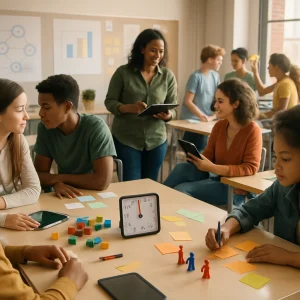
Active learning is not optional: it is fundamental to teaching 21st‑century skills. This lesson translates research and theory into classroom‑ready practices that reliably increase engagement, participation and retention. You will find practical techniques you can adapt immediately — routines, grouping options, assessment moves and a complete active‑lesson sequence that keeps learning close to students’ lives and to real situations.
What this lesson gives you
- Clear, measurable objectives you can map to curriculum goals.
- Practical routines (think‑pair‑share variants, stations, roleplay, hands‑on tasks) with timing and differentiation tips.
- Formative and summative assessment options that let you monitor learning in real time and adjust instruction.
- A worked example: an active lesson sequence you can import, modify and reuse.
- Principles to judge method choice (competence goal alignment, principle of closeness, student readiness, resources) and a simple four‑try rule for embedding new methods reliably.
Learning objectives (by the end of the lesson you will be able to)
- Design and justify active learning tasks that align to specific competence goals (use measurable verbs).
- Implement at least three active routines for whole‑class and small‑group settings (e.g., Think‑Pair‑Share variants, rotations, simulations).
- Use formative checks and short reflection routines to guide in‑lesson decisions and to document student progress.
- Evaluate and refine an active lesson sequence using student evidence and a brief summative check.
How this lesson is organised
- Topic 1 — Think‑Pair‑Share and Variants: fast routines to increase thinking time, voice and peer instruction.
- Topic 2 — Problem‑Based Learning (PBL) Basics: structuring real problems, scaffolding inquiry, and managing time and roles.
- Topic 3 — Hands‑on and Manipulative Activities: designing concrete tasks, materials lists, safety and assessment.
- Topic 4 — Simulations & Roleplay: framing scenarios, role briefs, debrief protocols to surface learning.
- Topic 5 — Stations, Rotations and Learning Centers: efficient layouts, task sequencing, and differentiation by readiness.
- Topic 6 — Practical Example: Active Lesson Sequence — a complete 30–60 minute plan with timings, prompts, assessment moves and student outputs.
Classroom design reminders (short, practical)
- Start with motivation (2–5 minutes). Keep direct instruction short (≈10 minutes). Make activation the heart of the lesson. Finish with reflection and repetition to consolidate memory.
- Define the competence goal precisely and choose the method that best serves that goal — not the other way round. Use measurable verbs (e.g., describe, construct, defend, design).
- Keep activities close to students’ experience and culture (principle of closeness). Realism increases transfer and motivation.
- Monitor actively: circulate, listen for misconceptions, intervene briefly, then return control to students. Capture outputs (photo, scan, or a shared document) so oral work becomes durable evidence.
- New methods need practice: try each at least four times before judging effectiveness. Expect early iterations to be imperfect; refine instructions and roles after each run.
Before you begin
- Have a single, specific competence goal for your class session.
- Gather any simple materials you’ll need (cards, markers, device links, timer).
- Prepare one formative check (quick poll, exit question, or short self‑evaluation) and one brief reflection prompt.
Proceed to Topic 1 to start with short, high‑impact routines you can put into practice today.